
invisible
Search
Search Results
Enter at least 3 characters
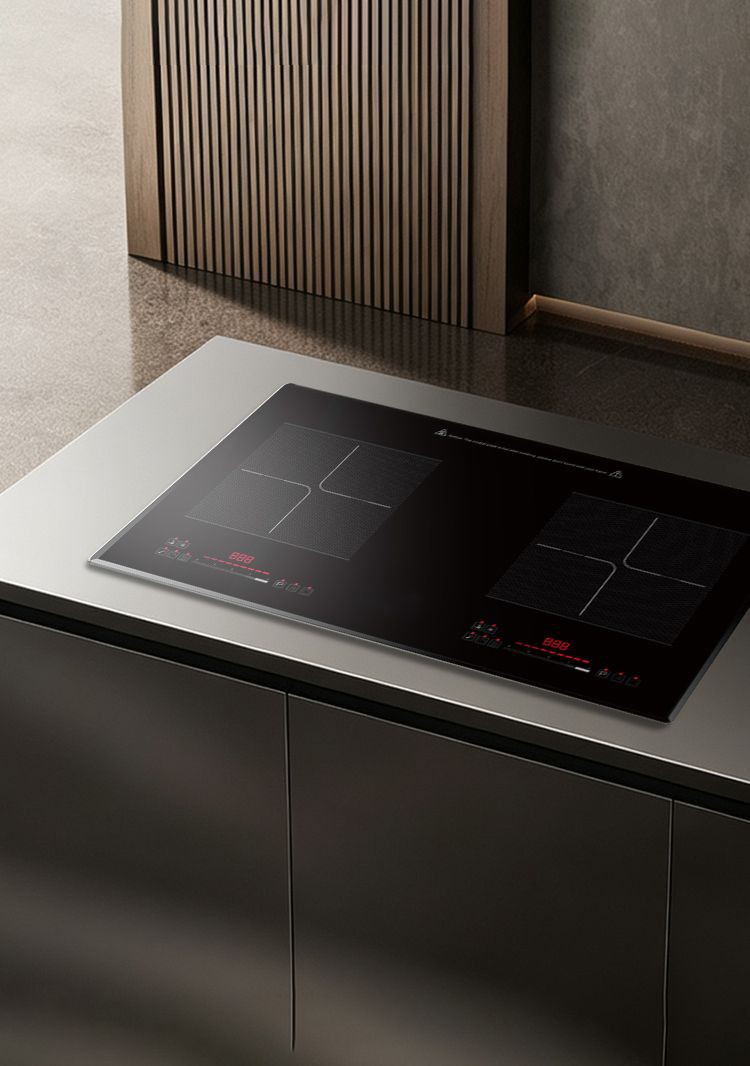
An induction cooker is an electric cooking appliance that uses electromagnetic induction to heat compatible cookware directly. Unlike traditional electric stoves and gas burners, it does not rely on a flame or a conventional heating element to transfer heat to the cooking pot.This technology provides fast heating response, adjustable power output and an efficient cooking process.But how exactly does an induction cooker work? What components are inside the appliance, and why does it require magnetic cookware?Let's explore the working principle and technology behind modern induction cookers.
1. What Is Electromagnetic Induction?
Electromagnetic induction is the physical principle that allows an induction cooker to generate heat inside compatible cookware.
When alternating current passes through a copper induction coil beneath the cooking surface, it creates a changing magnetic field.
When a suitable magnetic cookware base is placed above the coil, the changing magnetic field induces electrical currents within the cookware.
These currents encounter electrical resistance in the metal, producing heat through Joule heating.
As a result, the cookware itself becomes the primary heat-generating component.
This is why an induction cooker can heat a pan without using a traditional flame or exposed electric heating element.
2. How Does an Induction Cooker Work Step by Step?
The working process of an induction cooker can be divided into five main stages.
Step 1: Electrical Power Input
The appliance receives electrical power from the power supply. Its electronic control system manages the input according to the selected cooking settings.
Step 2: Power Conversion
The internal circuit converts the electrical input into high-frequency alternating current suitable for the induction coil.
Step 3: Magnetic Field Generation
The high-frequency current flows through the copper coil, generating an alternating magnetic field.
Step 4: Heat Generation in Cookware
The magnetic field induces electrical currents in the cookware base. Electrical resistance converts these currents into thermal energy.
Step 5: Temperature and Power Regulation
The control system monitors operating conditions and adjusts power output according to the selected settings and the appliance's protection requirements.
This process allows an induction cooker to deliver responsive and controlled heating.
3. What Are the Main Components of an Induction Cooker?
Understanding the internal structure helps buyers evaluate product quality and manufacturing capabilities.
Component
Main Function
Induction coil
Generates the alternating magnetic field
IGBT or power switching device
Controls high-frequency electrical switching
Rectifier circuit
Converts incoming AC power for the electronic system
Control board
Manages power output and operating functions
Cooling fan
Helps dissipate heat from internal components
Cooking surface
Supports cookware and provides a smooth cooking area
Temperature sensor
Monitors temperature for control and protection
The quality and design of these components influence heating performance, operating stability, durability and product safety.
4. Why Does an Induction Cooker Need Magnetic Cookware?
An induction cooker requires cookware that can interact effectively with its magnetic field.
Suitable cookware commonly includes:
Cast iron cookware.
Magnetic stainless steel cookware.
Other cookware with an induction-compatible magnetic base.
Aluminum, copper and glass cookware generally cannot be used directly unless they incorporate a suitable magnetic base.
A simple way to check cookware compatibility is to place a magnet against the bottom. If the magnet sticks firmly, the cookware may be suitable for induction cooking, although the appliance manufacturer's requirements should still be checked.
5. What Are the Main Advantages of Induction Cooking?
Induction technology offers several advantages for residential and commercial cooking applications.
Fast Heating Response
Because heat is generated directly in compatible cookware, induction cookers can respond quickly to power adjustments.
Energy Efficiency
Direct heating reduces heat transfer losses to the surrounding environment compared with many traditional cooking methods.
Precise Power Control
Electronic control systems allow users to adjust heating output for different cooking requirements.
Flame-Free Operation
Induction cooking does not require gas combustion or an open flame, making it a useful option for modern kitchen environments.
Easy Cleaning
Most induction cookers feature smooth glass-ceramic surfaces that are easier to clean than many traditional burner assemblies.
6. What Affects Induction Cooker Performance?
Not all induction cookers deliver the same performance. Several technical factors influence the overall cooking experience.
Rated power: Determines the available electrical heating capacity.
Induction coil design: Affects magnetic field distribution and heating characteristics.
Electronic control system: Influences power regulation and operating stability.
Cooling structure: Helps maintain suitable operating temperatures for internal components.
Cookware compatibility: Affects how effectively energy is transferred into the cooking vessel.
Electrical supply: Voltage and current capacity must match the product requirements.
For manufacturers and distributors, these factors are important when evaluating product specifications and comparing different induction cooker models.
Frequently Asked Questions
Q1: Does an induction cooker produce heat directly?
Yes. It generates heat inside compatible cookware through electromagnetic induction rather than relying on an open flame.
Q2: Is the induction cooker surface hot?
The cooking surface is not the primary heat source, but it can become hot due to heat transferred back from the cookware.
Q3: Can an induction cooker work without a pan?
Most models include cookware detection or related protection functions. Their exact behavior depends on the product design.
Q4: What is the role of the IGBT in an induction cooker?
The IGBT is a power semiconductor switching device used in many induction cooker designs to control high-frequency electrical power supplied to the induction coil.
Q5: What determines the service life of an induction cooker?
Component quality, electronic circuit design, cooling performance, operating conditions, maintenance and manufacturing quality all influence product lifespan.
An induction cooker works by using electromagnetic induction to generate heat directly inside compatible cookware. Its core technologies include power conversion, high-frequency switching, induction coil design and electronic control.Understanding these principles helps distributors, importers and commercial kitchen equipment buyers evaluate product specifications and select suitable induction cooking solutions.If you are sourcing induction cookers for your brand or distribution business, working with a manufacturer that understands induction heating technology can help ensure consistent product quality and long-term supply support.Contact us today to learn more about our induction cooker products, technical specifications and OEM/ODM manufacturing services.
© 2026 Copyright © 2026 Qinghanyuan. All rights reserved. Presented by Qinghanyuan.